
Imaginal Embodiment: Body and Psyche


In December, I fell ill with a severe winter flu in the UK that unfolded over several weeks. During my recovery in January, I returned—quite naturally—to the healing and balancing practice of Imaginal Embodiment, working again with images, movement, and meditative attention to the body. That return became the immediate catalyst for completing this book.
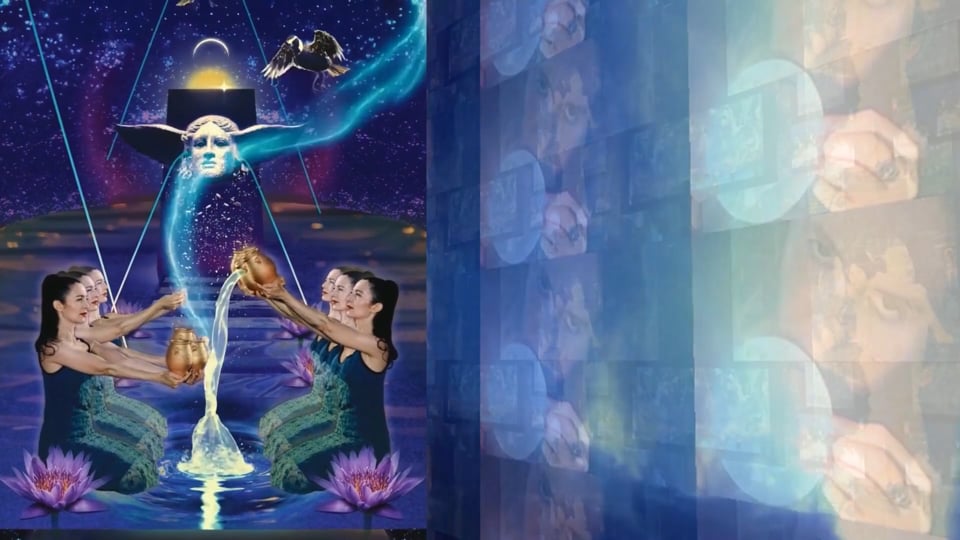
Imaginal Embodiment: Body and Psyche is conceived as a multimedia publication in which written meditations are accompanied by photographic and video images, accessed through augmented reality and a dedicated webpage.
The meditations offered in the book guide awareness toward the body as a site of imaginal experience, fostering grounding, wholeness, and a sense of safety within one’s own being. Through imaginal engagement and subtle bodily attunement, a shift from mental strain and disembodiment toward a calmer, integrated body–psyche relation may unfold—often within a short time.
Imaginal Embodied Meditations draw on decades of artistic research, somatic practice, and interdisciplinary inquiry. Recent scientific research in neuroscience and aesthetics—discussed in the final chapter of the book—supports the validity and effectiveness of this approach. The work originates in pioneering ideas that first emerged in the mid-to-late 1990s during my practice-based PhD research in dance on screen. This research included the Gaian Dreaming project, which has continued to evolve since the completion of my doctorate at Middlesex University, UK, in 2001.
Through working with movement and dance in natural environments, I developed a deep awareness of the relationship between the body, the environment, and imaginal content emerging from the unconscious—or, in Jungian terms, from the psyche or soul. Movement became a non-verbal mode of correspondence between the body, environmental elements, and inner imaginal visions: a symbolic, often non-verbal language of the psyche.

Moving from live movement and natural environments into film and video, the screen revealed itself as far more than a technological surface for image display. It became a medium capable of conveying the essence of environments and movement—their intangible, spiritual, and metaphysical qualities. Screen-based work did not replace embodied experience in nature or live dance; rather, it offered a new aesthetic expression of them. I observed that viewers could enter into a subtle relational exchange with the images on the screen, opening the possibility of integrating such images into embodied, holistic meditative practice.
For this purpose, I collaborated with Vered Ketter, whose work resonated deeply with this vision. Vered Ketter is an experienced teacher who has worked with thousands of people in the fields of body–mind integration, spiritual awareness, and personal growth. Her master’s dissertation in dance studies at the University of Surrey explores the relationship between postmodern dance and Western holistic movement theories. She holds a BA in physical education, posture care, and pain prevention, and teaches health tai chi, qigong, and guided imagery. Vered designed and wrote embodied meditations that correspond with the photographic and video images of the Gaian Dreaming collection and the dance ritual film Gaia – Mysterious Rhythms.
There is no need to be a dancer or an experienced mover to practise these imaginal embodied meditations. They require minimal movement and may even be practised in stillness. Yet the practice can awaken sensory and visceral experience of embodiment within moments.
In 2026, I offer this expanded and updated edition of our pioneering practice, now grounded in a strong academic and scientific framework that articulates its value and effectiveness. The work offers a direct way to regain a sense of balance, and readers are invited to give the practice time to unfold—perhaps by engaging with one meditation per day.
The practices explored in Imaginal Embodiment: Body and Psyche are also taught within my Alef Trust course Spirituality and the Imaginal. The book’s contents will be shared with students of my Alef Trust course Spirituality and the Imaginal, offered as part of the MSc in Consciousness, Spirituality, and Transpersonal Psychology, accredited by Liverpool John Moores University. The course is also open to non-degree participants (Open Learners).
Students will have access to a dedicated online forum where they can share their experiences of Imaginal Embodiment practice and receive guidance from me. Within the course, they also study and practise the Jungian method of Active Imagination, with Imaginal Embodiment complementing this work by adding a grounding, embodied dimension.

The book will be released in print in February and will be supported by a dedicated webpage for those who prefer to access the videos outside the augmented reality format. The scientific rationale for incorporating digital media is discussed in the book.
Wishing you a joyful, embodied meditative journey, rich with moments of imaginal enchantment and quiet soul magic.
Dr Lila Moore




Comments